01
M&A Adviser · Buy-side · Comprehensive Review
Test what the buyer is really underwriting.
A deeper commercial review designed to challenge the durability, transferability and growth credibility behind the investment case before the buyer commits.
Your situation
This is for you when…
The transaction has moved beyond initial interest and the buyer needs a fuller commercial view of what has to be true for the case to hold. The objective is to test revenue durability, management capability, transferability and the practical credibility of the growth plan.
What you receive
A decision-ready commercial output.
The review is tightly scoped around the decision. You know what comes back, what it is designed to clarify and what it enables the team to do next.
02
Revenue and customer-quality analysis
03
Growth-case challenge
04
Management and transferability assessment
05
Priority risk / evidence / opportunity map
06
Buyer readout
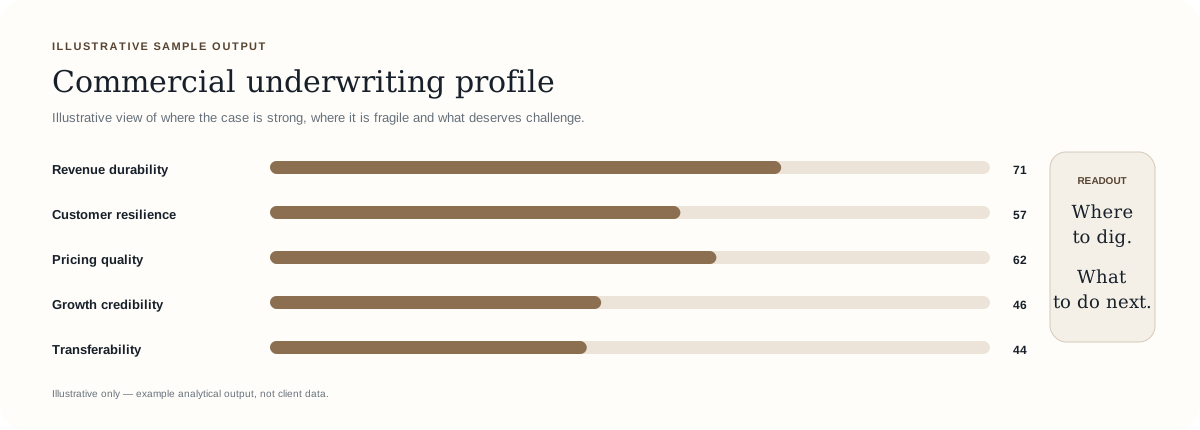
Example analytical output
See what the review can make visible.
This is a deliberately simplified mock output. The full review combines the score or signal with evidence, interpretation, implications and recommended action.
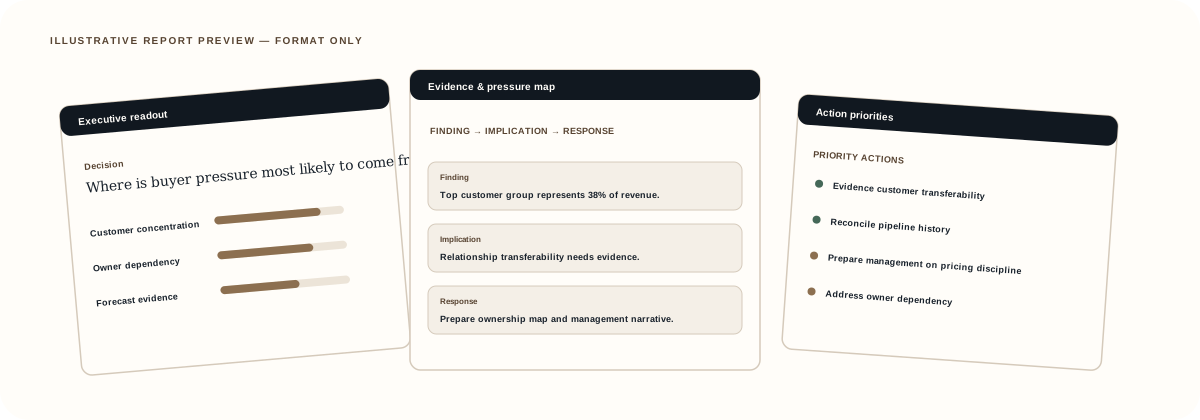
Illustrative report preview
See how the analysis comes back.
The final format will vary by mandate, but the principle is consistent: evidence, interpretation, transaction implication and recommended action — not a long diagnostic report with no decision attached.
01 · EvidenceWhat the data and operating reality show.
02 · InterpretationWhy the finding matters commercially.
03 · ImplicationWhat it means for the transaction or investment case.
04 · ActionWhat should be challenged, prepared or executed next.
What we test
Only the commercial questions that matter to the decision.
The analysis goes beneath headline performance to test how revenue is created, retained, evidenced, managed and transferred.
Revenue durability and customer resilience
Pricing and margin quality
Pipeline / forecast reliability
Sales execution capability
Management depth and owner dependency
Growth plan credibility
Revenue Execution method
Diagnose → Plan → Execute
A consistent operating method, applied to the transaction or ownership decision in front of you.
Diagnose
Test the engine.
Assess the quality, durability and transferability of the commercial system behind the numbers.
Plan
Challenge the thesis.
Translate findings into investment questions, evidence requirements and the assumptions that need to hold.
Execute
Prepare for ownership.
Where relevant, turn diligence findings into a practical post-close commercial agenda.
What changes
What this gives you.
The buyer gets a clearer view of downside risk, transferability and the assumptions that have to hold for the commercial thesis to work.
Revenue Execution Advisory
Test the case before you underwrite it.
Tell us the stage of the transaction, the key growth assumptions and where the commercial case feels least proven.