For M&A Advisers

Add commercial depth without getting in the way of the deal.

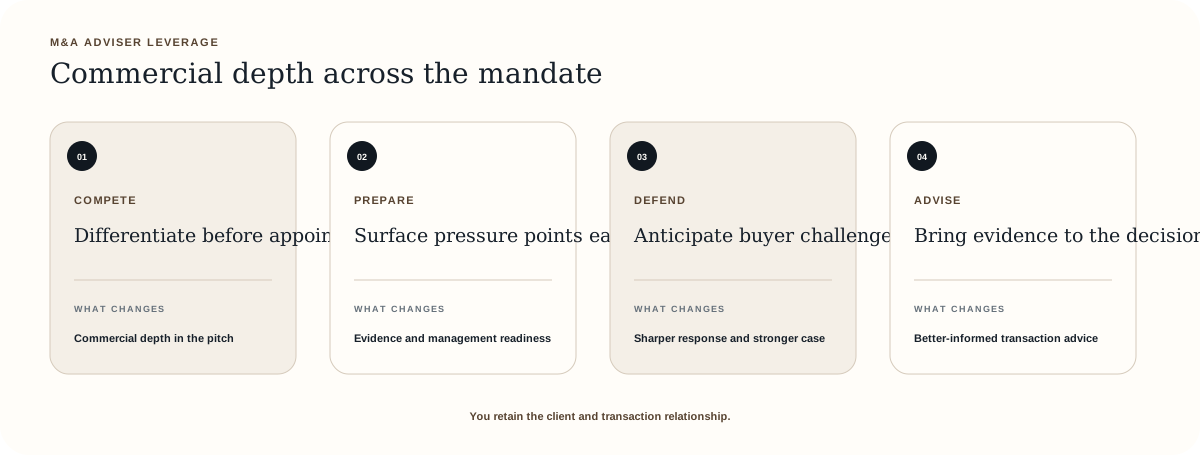
Revenue Execution works alongside the lead adviser to see the commercial business through an operator's lens — surfacing issues earlier, strengthening evidence, preparing management and creating better ammunition to defend value or challenge assumptions.

Sell-side

Prepare. Evidence. Defend.

“What will a buyer challenge — and are we ready to answer it?”

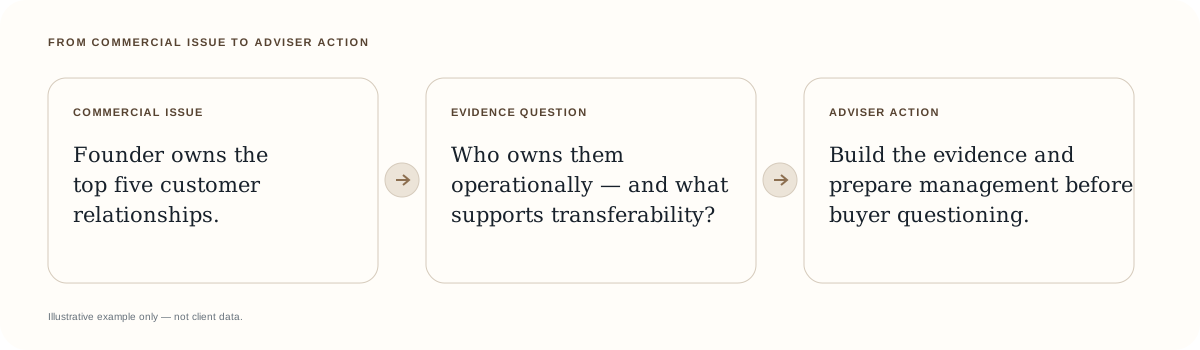
By the time a buyer finds the commercial weakness, it can become leverage. The better time to find it is before the process creates pressure. We help the adviser and management team separate what can be fixed, what must be evidenced and what needs to be defended.

Sell-side · rapid assessment

Quick View

What could a buyer challenge first?

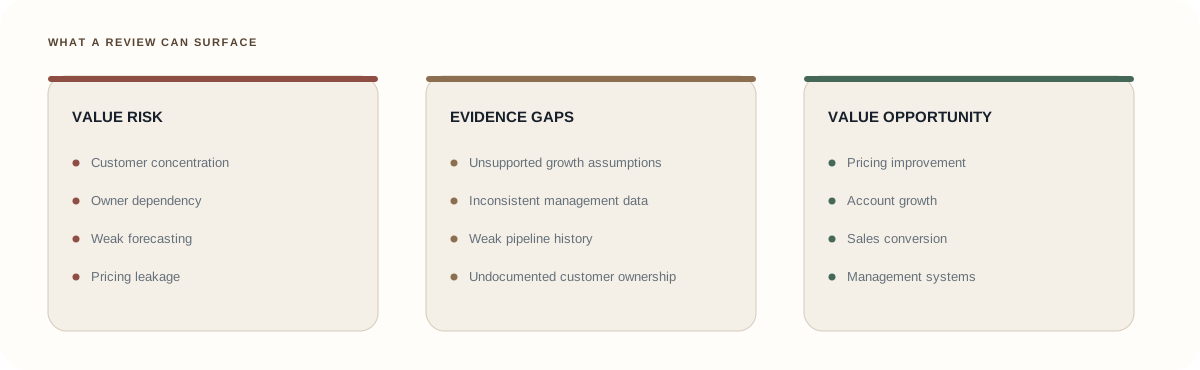
A focused commercial screen for a client entering preparation or early scrutiny. Identifies the few risks, evidence gaps and buyer questions most likely to matter.

Typical outputs
Red flags · Evidence gaps · Buyer questions · Adviser briefing
Sell-side · deep assessment

Comprehensive

Can the commercial story stand up?

A deeper evidence-led assessment of revenue quality, concentration, pricing, forecast, growth, management, owner dependency and the commercial system behind performance.

Typical outputs
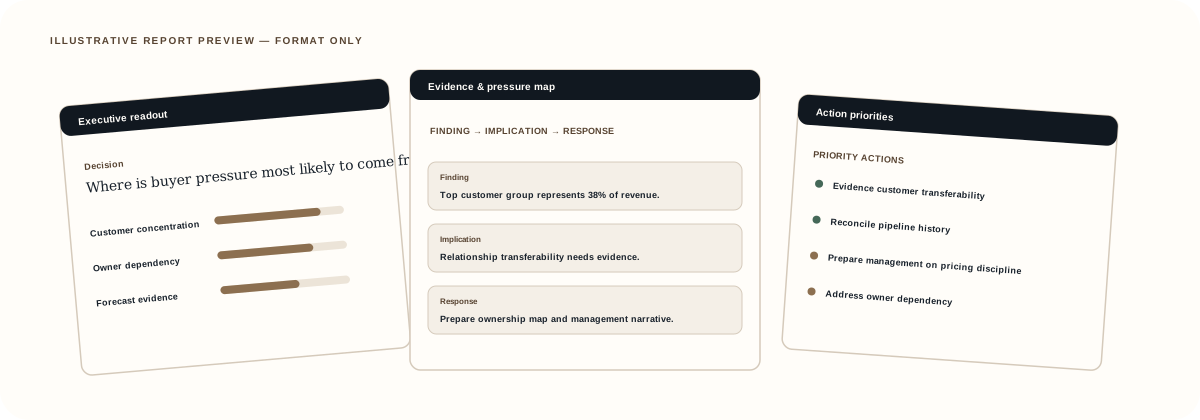
Risk register · Evidence register · Management Q&A · Remediation priorities
Transaction context

Mandate → preparation → buyer scrutiny → diligence

Revenue Execution

Diagnose → Plan → Execute as required

Adviser value

Strengthen the client story and reduce avoidable buyer leverage.

Buy-side

Assess. Challenge. Advise.

“What isn't obvious from the information we've been given?”

The headline numbers may look convincing while the operating reality underneath them is fragile. We test the durability and transferability of performance, challenge the growth case and identify commercial issues that may change the advice.

Buy-side · rapid screen

Quick View

What should the buyer challenge next?

A fast screen that sharpens evidence requests, management questions and the areas where deeper diligence is most justified.

Typical outputs
Red flags · Evidence requests · Buyer questions · Hidden-value themes
Buy-side · deep assessment

Comprehensive

Can performance and growth transfer?

A deeper assessment of commercial risk, revenue quality, pricing, forecast credibility, owner dependency, growth assumptions and hidden upside.

Typical outputs
Risk register · Hidden-value register · Thesis challenge · Acquisition implications
Transaction context

Mandate → screen → assess → challenge → advise

Revenue Execution

Diagnose → Plan

Adviser value

A stronger evidence-led basis for advice, negotiation and next-step decisions.

What happens next

The relationship does not have to start or end with a live deal.

Some of the most valuable commercial work happens before a client is ready for market, or after an early review shows that more needs to change. These are separately scoped solutions, not bundled diligence.

Future mandate readiness

Readiness Roadmap

Good business. Wrong time?

Turn “not ready yet” into a practical path toward a stronger future mandate with clear commercial gaps, milestones and reassessment criteria.

Use when
The adviser wants to stay close to a credible future client without forcing an early process.
Management preparation

Evidence & Q&A

Can management prove the story?

Build the commercial evidence trail, tighten management answers and prepare for the questions a buyer is likely to ask.

Use when
The underlying story is credible but the proof and management articulation are not yet transaction-ready.
Commercial remediation

Execute the fixes

What can still be improved before market?

Where there is enough time, turn findings into operating change across process, management information, pricing, pipeline or owner dependency.

Use when
The issue is fixable and the commercial value of fixing it exceeds the cost of waiting.
Illustrative sell-side case

Strong numbers. Avoidable buyer leverage.

The value is in finding the challenge before the buyer does — and giving the adviser options.

€18m specialist services company

A credible growth story and strong EBITDA, but the commercial assessment identifies concentration and relationship dependency that could weaken confidence if first surfaced by the buyer.

41%Revenue in 4 customers
2Founder-owned key relationships
VariableForecast accuracy
StrongHeadline EBITDA
Fix

Broaden account ownership and tighten forecast governance where time allows.

Evidence

Customer tenure, renewal history, relationship depth and historic pipeline conversion.

Defend

Prepare management to explain concentration quality and mitigation without becoming defensive.

Adviser benefit

A stronger, evidenced transaction story before the buyer sets the narrative.

Illustrative only; not a real client engagement.
Why Revenue Execution

Commercial depth from someone who has operated inside the system.

Revenue Execution brings operator experience to the transaction question. The aim is not to duplicate the adviser; it is to add commercial judgement where the numbers alone do not explain how the business really works.

Operator experience

Inside-out judgement.

Built and led commercial systems, teams and partner motions in real operating environments.

For advisers
Commercial depth that helps you prepare, evidence and defend the client story.
Transaction relevance

Find what matters.

Separate genuine commercial risk from noise, evidence gaps and fixable execution issues.

Result
Sharper management questions and a clearer basis for advice.
From finding to action

More than a red flag list.

Where useful, translate findings into preparation, remediation and a stronger future transaction position.

Method
Diagnose → Plan → Execute
FAQ

Questions an adviser should ask before bringing us in.

The scope is designed to strengthen the mandate, not blur responsibilities.

Are you duplicating our own commercial work?

No. The adviser remains the lead adviser. Revenue Execution adds a deeper operator-led commercial assessment layer where more evidence, challenge or management preparation is useful.

What happens if you uncover something negative?

That is usually the point of doing the work early. We separate what can be fixed, what needs stronger evidence and what management must be ready to defend.

Does this replace vendor commercial due diligence?

No. It can complement formal VCDD or help a client prepare before it. The work is not presented as legal, financial, tax or formal valuation diligence.

Do you work directly with the owner or through us?

Either can work, but the adviser relationship and mandate boundaries are agreed upfront. Revenue Execution should strengthen the adviser's position, not compete with it.

Can you work on buy-side alongside other diligence providers?

Yes. The work is designed to sit alongside financial, legal, tax, market, technical or cyber diligence rather than duplicate those disciplines.

Can you help before a client is ready to go to market?

Yes. Readiness, evidence-building and commercial remediation can be separately scoped so the adviser has a credible path from “not yet” to a future mandate.

For M&A Advisers

Bring more commercial depth to the mandate.

Tell us which side of the deal you are on and what is happening now. We will tell you quickly where Revenue Execution fits — and where it does not.

Discuss a mandate →