For PE / Buyers

Understand the commercial risk you are buying — and the value you may be missing.

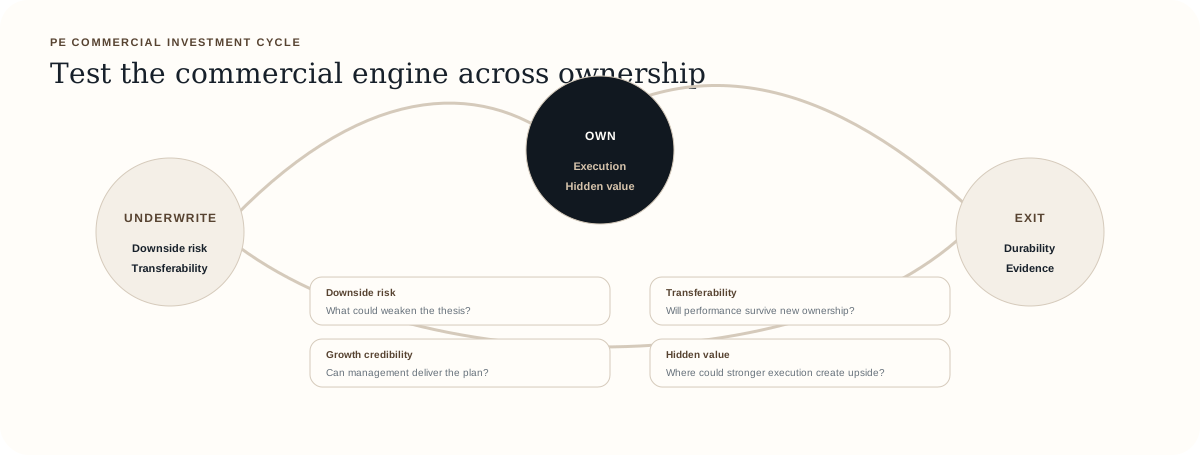
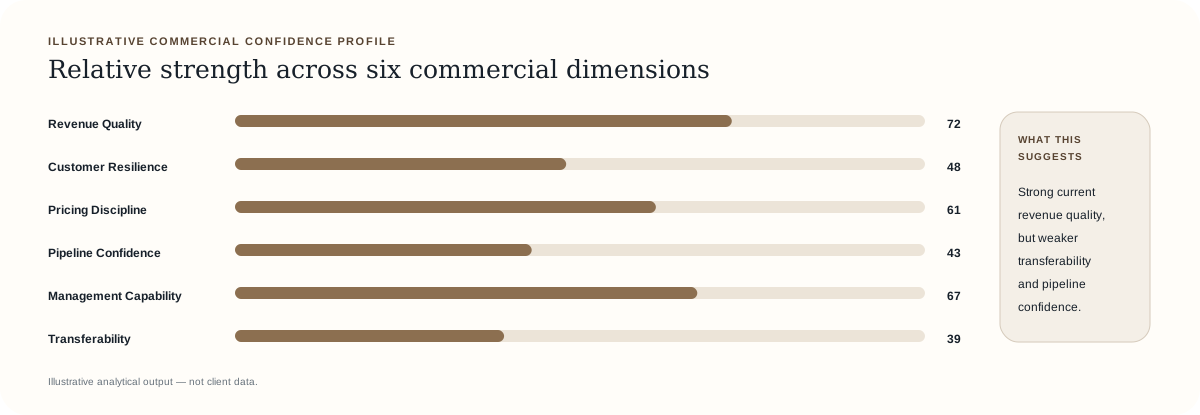
Revenue Execution tests how the commercial business actually works: the quality and transferability of revenue, concentration, pricing, pipeline, management capability, owner dependency, growth credibility and the operating conditions required to capture upside.

Buy-side acquisition

Test the investment case.

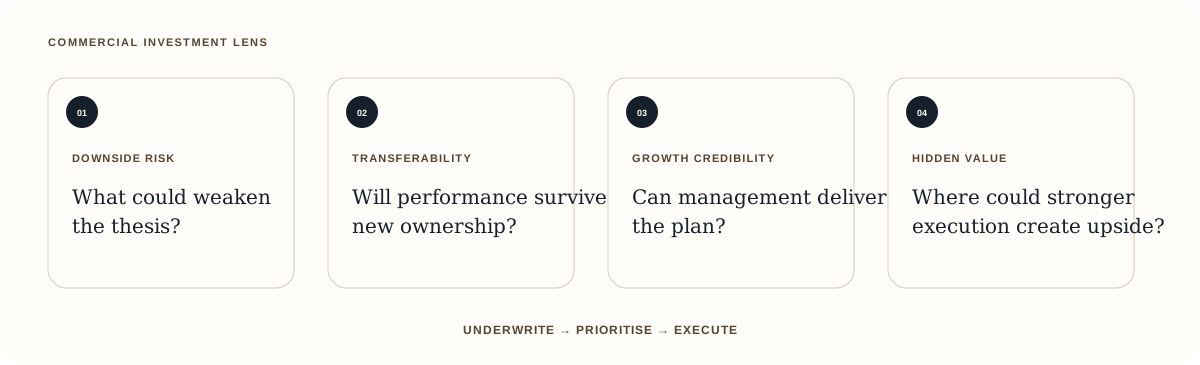
“What could undermine the thesis — and where is hidden value?”

A business can look healthy in the numbers while the commercial engine underneath is fragile. We test sustainability, transferability and execution risk, then separate genuine upside from attractive but unproven narrative.

Buy-side · rapid screen

Quick View

What deserves attention now?

A rapid risk and upside screen for a live or near-term target. Designed to sharpen IC questions and focus deeper diligence.

Outputs
Red flags · Evidence gaps · Buyer questions · Hidden-value themes
Buy-side · deep assessment

Comprehensive

How sustainable and transferable is performance?

Evidence-led commercial assessment covering revenue quality, pricing, forecast credibility, owner dependency, management, growth assumptions, systems and hidden upside.

Outputs
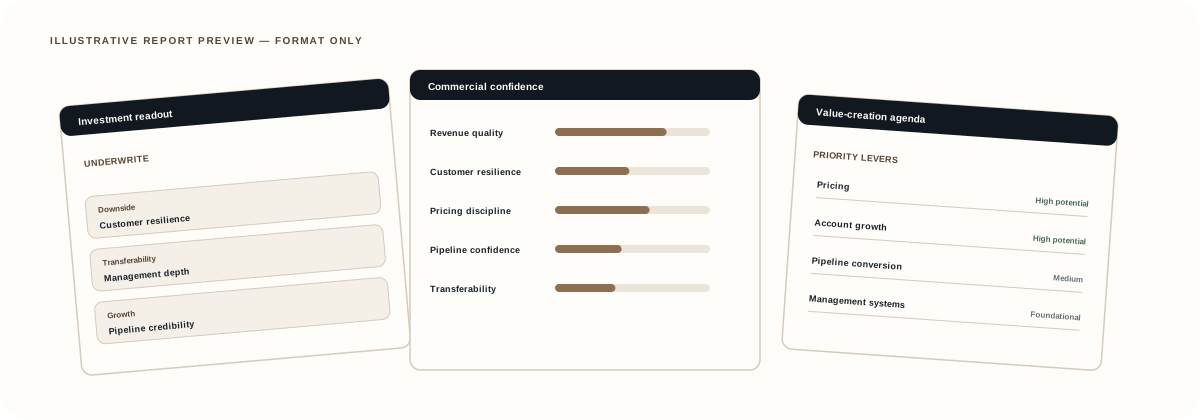
Risk register · Hidden-value register · Thesis challenge · Initial 100-day priorities
Transaction context

Initial review → screen / diligence → IC decision → close / stop

Revenue Execution

Diagnose → Plan; execution can follow if separately scoped

Buyer value

Clearer underwriting, sharper challenge and fewer avoidable surprises.

Sell-side · portfolio exit

See the asset through the next buyer's eyes.

“What could weaken exit value or buyer confidence if we went to market now?”

Preparing an asset for exit is not just about a strong financial story. The commercial claims need to survive buyer scrutiny, management needs to evidence them, and avoidable weaknesses should be surfaced while there is still time to act.

Portfolio exit · rapid review

Quick View

Where are the avoidable pressure points?

A buyer-eye review of the commercial story before the process becomes expensive and time-pressured.

Outputs
Exit-readiness screen · Evidence gaps · Value risks · Priority actions
Portfolio exit · deep assessment

Comprehensive

Can management defend the story?

A deeper exit-readiness assessment with evidence validation, management challenge preparation and a commercial remediation roadmap.

Outputs
KPI / evidence validation · Risk register · Buyer Q&A · Remediation roadmap
Transaction context

Exit decision → prepare asset → buyer scrutiny → transaction

Revenue Execution

Diagnose → Plan → Execute as required

PE value

Surface issues early, strengthen evidence and prepare management to defend the commercial reality.

What happens next

Turn diligence insight into better ownership decisions.

Diligence can identify the issue. Ownership is where it gets fixed. These are separately scoped future solutions that connect the transaction decision to practical commercial value creation.

Post-close

100-Day Commercial Priorities

What should management address first?

Translate diligence findings into a focused set of early commercial priorities, owners, evidence requirements and operating actions.

Use when
The deal proceeds and the investment team wants the commercial findings to survive handover into ownership.
Portfolio value creation

Commercial Maturity

Where is performance constrained by the system?

Strengthen pricing, pipeline, sales process, management information, account growth and owner dependency where commercial immaturity is holding back value.

Use when
The asset is good, but the commercial system needs to catch up with the investment ambition.
Future opportunity

Not-Ready Roadmap

What would have to change before we reconsider?

Convert “good company, not investable yet” into milestones, evidence requirements and a structured path to reassessment.

Use when
The opportunity is worth staying close to, but current commercial risk is too high to underwrite confidently.
Illustrative buy-side case

Risk and opportunity can be the same finding.

A weak commercial discipline may reduce confidence in today's performance while creating a real post-close improvement opportunity.

Redwood — €14.8m B2B target

Healthy business. Strong niche. But the underwriting case depends on whether repeat revenue is genuinely durable and whether management can replace founder-led growth.

68%Repeat / contracted
42%Top-5 concentration
~47%Founder in significant wins
14.2%EBITDA margin
Risk

Founder dependency weakens transferability and confidence in pipeline continuity.

Evidence gap

Management's recurring-revenue description requires finer segmentation and historic validation.

Hidden value

Pricing governance and account expansion are immature relative to the installed customer base.

Deal implication

Proceed with clearer assumptions, focused management questions and explicit early priorities.

Illustrative only. Opportunity themes are hypotheses until supported by evidence; no valuation uplift is implied.
Why Revenue Execution

Commercial judgement from the operator's seat.

Revenue Execution looks beyond whether the plan is attractive to whether the commercial system can actually deliver it — and what can realistically be improved after close.

Operator experience

Built inside the system.

Experience across sales, GTM, partnerships, commercial operations, leadership and transformation.

For PE / Buyers
Commercial judgement that helps you understand what you are underwriting and what can actually be improved after close.
Underwriting relevance

Test transferability.

Separate current performance from the people, relationships and processes it depends on.

Result
A clearer view of risk, sustainability and execution assumptions.
Value creation lens

Find the fixable upside.

Identify where weak commercial maturity may be both a risk today and a practical value-creation opportunity tomorrow.

Method
Diagnose → Plan → Execute
FAQ

Questions PE teams should ask.

The assessment is designed to complement, not imitate, the rest of the diligence workstream.

How is this different from traditional CDD?

The emphasis is on how the commercial system actually operates: revenue quality, transferability, owner dependency, sales execution, pricing, forecast credibility, evidence and post-close implications. Market CDD can sit alongside it where required.

Can you work alongside financial or market diligence providers?

Yes. The scope is explicitly bounded so the work complements financial, legal, tax, market, technical and cyber diligence rather than duplicating it.

How do you test management's growth assumptions?

By tracing the plan back to historical conversion, customer behaviour, capacity, pricing, channel performance, sales productivity and the evidence supporting the stated assumptions.

How do you identify hidden value?

We look for underexploited commercial levers such as pricing, account expansion, proposition, recurring-revenue potential, channel, sales productivity and management systems — then separate evidence from inference and hypothesis.

What if the business is good but commercially immature?

A Not-Ready Roadmap can identify what has to change, what evidence needs to build and when the asset should be reassessed.

Can findings become the post-acquisition plan?

Yes. Comprehensive work can identify initial 100-day priorities. Full post-close execution is a separate scope and is deliberately not bundled into diligence.

For PE / Buyers

Know what you are underwriting before you own it.

Tell us where you are in the deal and what decision you need to make. We will map the right depth of assessment to the situation.

Discuss an opportunity →